
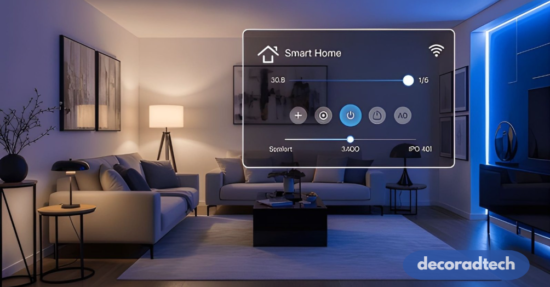
Smart homes are no longer about showing off voice assistants or sticking automated gadgets onto every empty surface. The real shift happening right now is about camouflage. The most impressive modern homes don’t look “tech-heavy” at all—they feel like calm, stylish, high-end living spaces where the technology quietly does its job from inside the architecture.
This is exactly the design philosophy many homeowners are now exploring through
decoradtech-inspired interiors—a movement dedicated to embedding technology into structural elements and finishings so seamlessly that the devices disappear entirely.
Let’s walk through practical, real-life smart home interior design ideas that actually work in everyday homes.
What Makes an Interior Design Truly “Smart”?
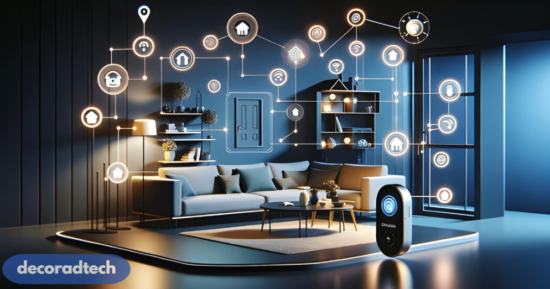
A smart interior is not defined by gadgets; it’s defined by integration. The technology should support your lifestyle, not dominate the space.
A well-designed smart home usually includes:
- Hidden or minimal tech visibility to keep the focus on aesthetics.
- Automated ambient features that adjust naturally to your daily routines.
- Furniture that supports connectivity via built-in charging, sensors, and storage.
- Voice or app-controlled systems that operate without interrupting the visual flow.
The decoradtech design approach fits perfectly here because it prioritizes high-utility functionality without breaking the visual line of the room.
Architectural Lighting: Painting with Hidden Lumens
One of the most noticeable upgrades in smart homes today is lighting. Rooms can be completely transformed just by switching from traditional fixtures to layered smart lighting systems.
To get the best results, focus on subtlety.
- Warm Ambient Glow: Low-glare, indirect lighting to soften spaces for evening relaxation.
- Dynamic Task Lighting: Targeted, cool-toned illumination for kitchens, home offices, or reading nooks.
- Concealed Accent Lighting: Hidden directional strips used to highlight artwork, architectural texturing, or feature walls.
- Motion-Triggered Pathways: Low-intensity, automated foot-level lighting for hallways and stairs.
Bright, harsh central lighting is fading out. Instead, smart dimmable systems adjust automatically based on the time of day. In many interiors influenced by https//decoratoradvice.com lighting is hidden inside ceilings, shelves, and wall panels. You don’t see the source—you just feel the effect.
Dual-Purpose Furniture: Hidden Power and Zero Cords
A mistake often seen in DIY smart homes is treating gadgets separately from furniture. In modern interior planning, furniture itself becomes smart.
Trending Integrations
- Sofas with built-in, fabric-concealed charging ports.
- Coffee tables with wireless charging surfaces integrated directly into the tabletop.
- Beds equipped with invisible sleep-tracking sensors under the mattress.
- Modular storage units designed with hidden internal cable routing systems.
Integrating these elements keeps the room feeling incredibly clean. There are no messy wires and no visible adapters, fulfilling a core principle of decoradtech: designing furniture for both physical comfort and digital lifestyle support.
Designing for Invisible Tech Integration
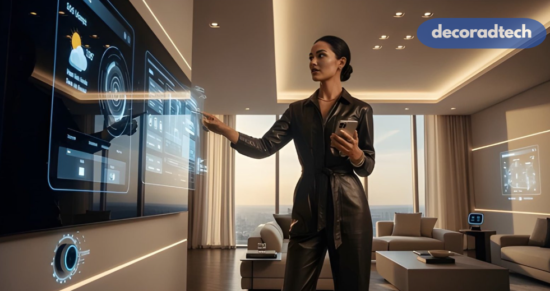
If there is one definitive trend shaping modern smart interiors, it’s invisibility. Homeowners want a functional living space, not a retail electronics store.
Today’s design palette leverages hidden innovations like built-in smart speakers recessed directly into walls and invisible TV panels that seamlessly transition into decorative mirrors when turned off. Similarly, app-controlled curtains and blinds utilize motorized tracks hidden inside ceiling pockets, while centralized smart home hubs remain tucked away inside custom cabinetry. The goal is simple: you control everything, but you see nothing.
The Minimalist Smart Kitchen
The kitchen is where smart design directly improves daily efficiency. Modern setups prioritize smooth workflows over decorative overload by focusing on clean countertops, hidden appliances, and seamless cabinetry.
Essential Smart Kitchen Elements: Touchless faucets cut down on mess during food prep, while smart refrigerators track inventory automatically. Flush-mounted induction cooktops feature safety sensors that blend directly into the counter surface, backed by automated task lighting tucked cleanly under the cabinets.
Ideas like these are often explored in detail on decoratoradvice .com partners especially in the context of smart home interiors.
Elevating the Bedroom into a Wellness Zone
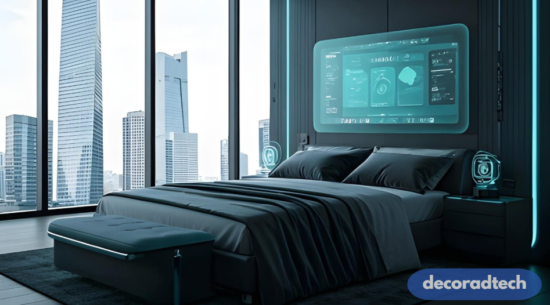
Bedrooms are shifting from mere sleeping spaces to dedicated wellness environments. To create a tranquil, tech-free atmosphere that still leverages top-tier automation, focus on structural adjustments rather than tabletop devices:
- Electrochromic Smart Glass: Windows that switch from perfectly clear to frosted or deep tint via voice command, eliminating the need for heavy, dust-collecting blackout drapes.
- Circadian Rhythm Programming: Lighting arrays that slowly transition from energizing amber hues at sunrise to rich, blue-depleted tones as night approaches.
- Climate Zones: Smart HVAC registers that monitor room temperatures at mattress level to keep sleep cycles deep and uninterrupted.
Minimizing visual clutter and focusing on calm, neutral tones paired with hidden technology ensures that the space remains dedicated to rest.
Living Rooms Balanced for Entertainment and Comfort
The living room is where entertainment systems must coexist with daily comfort. The most successful modern spaces don’t look “high-tech”—they feel like comfortable lounges that just happen to be smart.
To achieve this balance, mount ultra-thin smart TVs flush against the wall to double as curated artwork when not in use. Integrate surround-sound speakers directly into the ceiling joists, and program automated lighting scenes that instantly transition the room’s atmosphere for movies, reading, or hosting guests with a single command.
Energy Efficiency and Smart Sustainability
Honestly, this is where smart homes start to feel really impressive. It’s not just about gadgets—it’s about your home quietly saving energy in the background without you constantly thinking about it.
For example, a smart thermostat slowly learns your routine—like when you wake up, leave the house, or wind down at night—and adjusts the temperature automatically. You don’t have to keep changing settings every day. Energy monitoring systems can also show you exactly where electricity is being used, which honestly makes you more aware of waste. And then there are those small but powerful automated shut-offs that turn off devices you forgot about, especially things left on standby.
Over time, you start noticing something simple: your bills go down, and you didn’t really have to “try” that hard.
This approach to design aligns with the kind of practical inspiration shared on latest news decoratoradvice.com.
Common Mistakes to Avoid

This is where I’ve seen a lot of people get excited and then run into problems later. Smart home upgrades are great—but only when they’re planned properly.
- Too many devices in one space: It’s easy to go overboard. But instead of feeling smart, the room just starts feeling crowded and distracting.
- No design consistency: A smart home still needs to look like a home. If devices don’t match the style, they stand out in a bad way.
- Visible wires everywhere: Nothing breaks the “clean smart home” feel faster than messy cables and exposed hubs.
- Buying tech first, planning later: This is a big one. The space should come first. Once the layout feels right, then you add tech that fits into it naturally.
Final Thoughts: Designing an Effortless Home
At the end of the day, a smart home isn’t really about having the latest devices. It’s about walking into a space where everything just works without you thinking about it.
If you’ve ever lived in a well-designed smart home, you’ll know what I mean—it doesn’t feel “high-tech” in a flashy way. It just feels easy. And honestly, that’s the whole point.
The most impressive homes are not the ones filled with obvious gadgets—they’re the ones where technology quietly enhances daily life without demanding attention.
A well-planned decoradtech-style home achieves exactly that balance: modern, functional, minimal, and emotionally comfortable. If you’re planning to upgrade your home, start with design flow first, then layer in technology slowly. That’s where real transformation happens.