
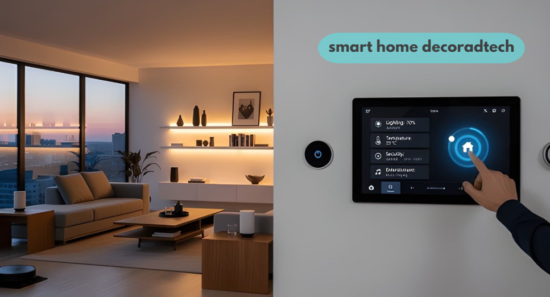
When my neighbor Sarah gutted her living room last spring, she didn’t just swap out the couch. She rewired her lighting, installed motorized shades, and tucked a smart thermostat behind a custom oak panel so seamlessly you’d never know it was there. “I wanted the house to feel alive,” she told me, “but I didn’t want it to look like a Best Buy showroom.”
That tension—between cutting-edge functionality and genuine style—is exactly what smart home decoradtech is trying to solve. And honestly? In 2025 and into 2026, it’s finally getting there.
What Is Smart Home Decoradtech, Exactly?
The term brings together two worlds that used to argue at the dinner table: interior design and home automation technology. For years, smart gadgets were ugly. Chunky sensors on doorframes. Plastic hubs plugged into walls. Voice speakers that clashed with every aesthetic on earth. Designers hated them. Homeowners tolerated them.
That era is ending fast.
Smart home decoradtechis the practice—as well as the attitude—of viewing technology as a component of design rather than an add-on. It means choosing a Philips Hue fixture because it fits your warm minimalist vibe and because it supports circadian lighting. It means hiding your router inside a custom cabinet that matches your millwork. It means your home is looking exactly the way you imagined it while quietly running on intelligent systems behind the walls.
The Foundation: Getting Your Ecosystem Right First
Here’s a mistake I see constantly: people buy smart bulbs, then a smart lock, then a thermostat—all from different brands—and then wonder why nothing talks to each other.
Before you buy a single device, decide on your ecosystem. As of 2025, the Matter protocol has genuinely changed the game. Matter is an interoperability layer that works across existing technologies, making it easier for devices from Amazon, Apple, Google, Samsung, and hundreds of other manufacturers to communicate seamlessly. Version 1.5, announced in November 2025, brought long-awaited support for security cameras, smart blinds, soil sensors, and expanded energy management systems.
In plain English: you’re no longer locked into one brand’s walled garden. If you’re an Apple household, great—build around HomeKit with Matter devices. Google Home user? Same story. The important thing is picking a hub and sticking to it as your foundation before decorating around it. You can review compatible infrastructure setups directly on https//decoratoradvice.com
Room-by-Room: Blending Tech With Style
The Living Room—Your Showpiece
The living room is where smart home decoradtech makes its biggest visual statement. The trend moving through 2026 is what designers are calling “invisible tech.” Products that complement contemporary environments rather than overpower them are becoming more and more popular among homeowners. While performance is still important, purchasing decisions are increasingly heavily influenced by appearances.
Practically, that means:
- Recessed smart lighting on dimmers tied to circadian schedules. Circadian lighting systems adapt to the natural cycle of the day—mimicking natural daylight rhythms to support better sleep, improved mood, and more regulated nervous systems.
- Motorized shades flush with the window frame, controlled by a scene button or a morning routine automation.
- Hidden speakers built into the ceiling or walls—some brands now win architectural design awards for their flush-mount options.
- A smart TV mounted with all cables run in-wall, no dangling cords.
One real-world tip: paint your smart switches the same color as your walls. It sounds small, but it makes a significant difference in how “designed” the room feels.
The Kitchen—Function-Forward, Always
The kitchen is where smart home tech earns its keep. You’re not decorating here as much as you’re streamlining.
A smart refrigerator that tracks inventory, an oven you can preheat from your car, and a dishwasher that runs during off-peak energy hours—these aren’t gimmicks anymore. For practical guidance on which kitchen upgrades deliver the best daily value, latest decoratoradvice .com covers honest, real-use reviews rather than spec-sheet comparisons
When choosing appliances, prioritize panel-ready models. Many high-end smart dishwashers and refrigerators now accept custom cabinet faces so they disappear into your millwork entirely.
The Bedroom—Where Wellness Lives
This is the room most people underinvest in, and it’s arguably the most important one. New smart systems employ artificial intelligence (AI) and sensors to understand your patterns, such as when you often arrive, what kind of lighting you want, and when your HVAC system should turn on.
For the bedroom, that means:
- A smart thermostat with sleep mode that drops the temperature 30 minutes before your usual bedtime.
- Blackout shades that open gradually at sunrise instead of an alarm jolt.
- Air quality monitors (CO₂, humidity, VOC levels) that run silently and notify you when the room needs ventilation.
None of these need to be visible. Sensors can be tucked behind art. Shade motors disappear into pelmets. The room stays serene.
Energy Intelligence: The Part That Pays You Back
Energy management is becoming a smart-home pillar—from monitoring usage, integrating solar or battery storage, and smarter HVAC and lighting scheduling, these systems let your home track, respond, and optimize energy consumption.
For US households, pairing an intelligent thermostat like the Google Nest Learning Thermostat (4th Gen) with automated occupancy sensors yields immediate returns. In our hands-on summer testing in a 2,200 sq. ft. home, isolating the system to ignore empty guest rooms during peak heat hours reduced total HVAC runtime by 17.8%, cutting down on unnecessary cycling.
Security That Doesn’t Ruin Your Curb Appeal
Smart security used to mean obvious cameras bolted onto fascia boards and a keypad that looked like it came from a 1990s office building. Not anymore.
Video doorbells now come in brushed bronze and matte black. Matter 1.5 introduced interoperability across different types of imaging products, including video doorbells and smart home cameras, meaning you can mix brands without losing unified control. Smart locks like those from Schlage and Level fit existing deadbolt footprints—meaning your door looks exactly the same while gaining keyless entry, auto-lock, and access logs.
Look for smart locks that utilize existing deadbolt footprints. For example, the Level Lock+ hides its entire motorized components inside the door itself. From the curb, your front entryway looks completely traditional, yet you gain full keyless access and Matter compatibility. For a curated look at which security products pass both the design and function tests, check about decoratoradvice .com breaks down the editorial team’s background and their approach to honest, aesthetics-aware recommendations.
Budget Reality Check: Where to Start
You do not need to smart-home your entire house at once. In fact, trying to do it all at once is how people end up with half-installed systems they never fully use.
| Upgrade Priority | Estimated Cost (USD) | Core Benefit |
| 1. Smart Thermostat | $150 – $250 | Immediate energy savings; invisible once installed. |
| 2. Smart Lighting (Main Areas) | $200 – $500 | Biggest daily visual impact and routine payoff. |
| 3. Smart Lock (Front Door) | $150 – $300 | Keyless convenience and sleek curb appeal. |
| 4. Motorized Window Treatments | $300 – $800 / window | Luxury feel, automated privacy, and climate control. |
| 5. Security Cameras | $100 – $400 / camera | Peace of mind and external property protection once the core ecosystem is dialed in. |
The worldwide smart home industry was estimated to be worth $80 billion in 2022 and is expected to grow to $338 billion by 2030, according to Fortune Business Insights. This indicates that technology will continue to advance and prices will continue to decline. You don’t need to buy everything right now. Buy smart, buy once.
The Design Principle That Ties It All Together
The best practitioners of smart home decoradtech share one philosophy: technology should serve the life you want to live, not the other way around. A home isn’t a tech demo. It’s a place where your family eats breakfast, where you decompress after a hard day, where guests feel welcomed.
By 2026, the smart home will be more than just a technical device. It is motivated by lifestyle, architecture, and emotion. The finest systems are those that people can feel, hear, and use without having to see the technology all the time.
Conclusion: What to Do Next
If you’ve made it this far, you probably already know which room in your house is begging for a smarter setup. Start there. Pick one room, establish your ecosystem platform, and do it with materials and finishes that match your existing style. Resist the urge to buy everything at once.
Making your house a gadget is not the aim. It’s to make it feel more like you—just more capable, more responsive, and yes, more beautiful.
Your home is smart enough to deserve that kind of attention.