
Last updated: October 30, 2026
At Activemyhouse, we believe gardeners deserve the straight answer before they spend money on bulbs — so here it is: true lilies are not deer resistant. They are among the plants deer seek out first each spring, and if deer visit your garden, unprotected lilies rarely survive long enough to bloom.
Key Takeaways
- The honest answer is no. True lilies (genus Lilium) are a deer favourite, not a deer-resistant plant.
- Rutgers rates Lilium as “Occasionally Severely Damaged” — tender shoots, foliage, flower buds and open flowers may all be browsed.
- The myth persists because of name confusion. Plants sold as “lilies” that deer avoid — Agapanthus, calla lilies, lily-of-the-valley and red hot poker — are botanically unrelated to true lilies.
- Tiger and leopard lilies are only partial exceptions — moderately resistant in some regions, but still browsed under pressure. They are not safe bets.
- Fencing is the only reliable protection. Repellents help only with regular reapplication, especially after rain.
- Companion planting does not shield lilies. Planting daffodils or alliums around them will not reliably stop deer.
- Real alternatives exist: daffodils, alliums, Agapanthus, Kniphofia, Crocosmia, gladiolus and calla lilies all give lily-like impact with genuine resistance.
The Honest Answer: No, True Lilies Are a Deer Favourite
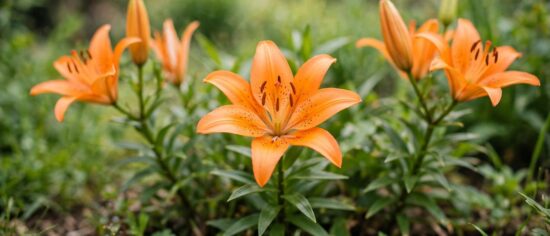
Let’s settle the question in the headline right away. Are lilies deer resistant? No. True lilies — every plant in the genus Lilium, including the Asiatic, Oriental, Trumpet and Martagon types — rank among the plants deer prefer most in spring and early summer, when new growth is lush and nutrient-dense.
The Rutgers New Jersey Agricultural Experiment Station, one of the most trusted authorities on deer-resistant landscaping, rates Lilium as “Occasionally Severely Damaged.” In plain language: tender shoots, foliage, flower buds and open flowers may all be browsed — deer can strip a lily planting at every stage of growth.
Field observation backs the rating up. In camera-trap studies, deer ate emerging Lilium regale shoots within 48 hours of sprouting — while the grasses and ferns growing right beside them went untouched. When deer choose lily shoots over everything else on offer, the “resistant” label stops making sense.
Why So Many Gardeners Think Lilies Are Deer Resistant
If true lilies are such a favourite, why does the idea of deer-resistant lilies keep circulating? Three reasons.
Name confusion is the biggest reason. Several plants marketed as “lilies” are botanically unrelated to true lilies — and they genuinely are deer-avoided:
- Agapanthus (“lily of the Nile”) belongs to the Amaryllidaceae family and is defended by alkaloids that deer dislike.
- Calla lilies (Zantedeschia) contain toxic sap and calcium oxalate crystals that deter browsing.
- Lily-of-the-valley (Convallaria majalis) is toxic, which keeps deer away.
- Red hot poker (Kniphofia) has tough, fibrous leaves that deer generally skip.
A gardener who plants Agapanthus, watches deer ignore it, and concludes “lilies are deer resistant” has drawn the wrong conclusion from the right observation. The plant that survived was never a lily at all.
Regional overgeneralisation is the second reason. In suburbs with low deer pressure, a few Asiatic lilies can survive for years — but that reflects abundant alternative forage, not plant chemistry. When deer have plenty of other food, they may pass over lilies. That luck gets misread as resistance.
Contradictory content-farm articles are the third. Some low-quality gardening sites claim Asiatic lilies are “consistently deer resistant” thanks to alkaloids. That claim conflicts directly with the Rutgers rating and with field observation. Treat those claims as what they are: content written to rank in search results, not to garden by.
The Two Partial Exceptions — Framed Honestly
Two true lilies deserve a nuanced mention: the tiger lily (Lilium lancifolium) and the leopard lily (Lilium pardalinum). In some regions, both show moderate resistance — deer browse them less readily than Asiatic or Oriental types.
But “moderate” and “in some regions” carry the whole weight of that sentence. Even these two get browsed when food is scarce or deer pressure is high. Do not plant a whole border of tiger lilies on the strength of a partial exception and call it a deer-resistant garden.
What Actually Protects Lilies in Deer Country
If you love true lilies and you garden where deer roam, protection has to be direct.
Fencing is the only reliable method. For valuable plantings, a physical barrier is the one approach that works consistently — a well-placed fence around a lily bed does its job without ruining the garden’s look.
Repellents help, with maintenance. Deer repellents applied regularly can reduce browsing — but they must be reapplied on schedule, and especially after rain, or their effect fades fast. Think of repellents as a supplement to fencing, not a replacement.
Placement and timing matter. Plant lilies where deer are less likely to browse — closer to the house, in busier parts of the yard — rather than at the woodland edge where deer travel.
What does not work: companion-planting shields. It is tempting to believe that ringing lilies with daffodils or alliums will keep deer away. Gardenia’s deer-avoidance guide is explicit on this point: planting resistant bulbs as a shield does not reliably prevent deer from reaching the plants they actually want. Deer simply step past the daffodils to get to the lilies.
Deer-Resistant Alternatives That Give You the Look
The good news: you can get lily-like drama from plants deer genuinely avoid:
- Daffodils (Narcissus) — defended by the alkaloid lycorine, with very high deer avoidance. The classic spring bulb for deer country.
- Alliums (ornamental onion) — organosulfur compounds make them unappealing to deer, and their globe flowers are architectural showstoppers.
- Agapanthus — the “lily of the Nile” that started the confusion, with genuine alkaloid-based resistance.
- Kniphofia (red hot poker) — tough fibrous foliage and torch-like blooms deer skip.
- Crocosmia — arching sprays of hot-coloured flowers, reliably avoided.
- Gladiolus — tall, dramatic spikes for summer cutting gardens.
- Calla lilies — elegant and deer-resistant, with one honest caveat: they are hardy outdoors in zones 8–10, so gardeners in colder zones need to lift the rhizomes for winter.
That last point matters generally: a resistant plant in the wrong zone is no help at all. Match the plant to your hardiness zone first, then enjoy the fact that deer leave it alone.
Lily Deer Resistance at a Glance
| Plant | Deer Resistance | Why | Source |
|---|---|---|---|
| Asiatic lily | Low — frequently browsed | Lush, nutrient-dense spring growth deer prefer | Rutgers New Jersey Agricultural Experiment Station |
| Oriental lily | Low — frequently browsed | Tender shoots, buds and flowers all eaten | Rutgers New Jersey Agricultural Experiment Station |
| Trumpet lily | Low — frequently browsed | Same strong deer preference | Rutgers New Jersey Agricultural Experiment Station |
| Martagon lily | Low — frequently browsed | Same strong deer preference | Rutgers New Jersey Agricultural Experiment Station |
| Tiger lily (Lilium lancifolium) | Moderate — regional only | Less readily browsed in some regions, not reliable | Gardenia |
| Leopard lily (Lilium pardalinum) | Moderate — regional only | Less readily browsed in some regions, not reliable | Gardenia |
| Daffodil (Narcissus) | High | Lycorine alkaloid; very high avoidance | Gardenia |
| Allium | High | Organosulfur compounds deter deer | Gardenia |
| Agapanthus (“lily of the Nile”) | High | Alkaloid-defended; not a true lily | Rutgers New Jersey Agricultural Experiment Station |
| Calla lily (Zantedeschia) | High | Toxic sap and calcium oxalate crystals | Gardenia |
Frequently Asked Questions
Do deer eat Asiatic lilies?
Yes. Asiatic lilies are true lilies (Lilium), and deer eat their emerging shoots, foliage, buds and flowers.
Are there any lilies that deer won’t eat?
No lily is fully deer-proof. Tiger lilies and leopard lilies show moderate resistance in some regions, but deer still browse them when food is scarce. The genuinely deer-avoided “lilies” — Agapanthus, calla lilies, lily-of-the-valley — are not true lilies at all.
Will deer repellents keep deer off my lilies?
Repellents can reduce browsing, but only with regular reapplication — especially after rain. They supplement fencing; they don’t replace it.
Does planting daffodils around lilies protect them?
No. Resistant bulbs planted as a shield do not reliably stop deer from reaching the plants they want. Deer will step past daffodils to eat lilies.
What should I plant instead of lilies in deer country?
Daffodils, alliums, Agapanthus, Kniphofia, Crocosmia, gladiolus and calla lilies all offer bold, lily-like presence with genuine resistance. Check your hardiness zone before choosing.
Conclusion
So, are lilies deer resistant? No — true lilies sit near the top of the deer menu. But knowing the truth is exactly what lets you garden successfully in deer country: fence the lilies you love, keep up with repellents, or plant daffodils, alliums and Agapanthus that deer leave alone. The garden you actually get to enjoy will always beat the garden the deer enjoyed first.