
Last updated: October 26, 2026
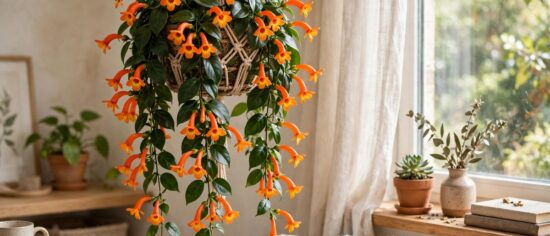
Goldfish plant varieties span two related genera, Nematanthus and Columnea, and they differ in flower shape, leaf colour and how far their vines trail. The right choice depends on your space, your light and whether you want a compact bush or a long hanging cascade.
Key Takeaways
- “Goldfish plant” covers two genera: Nematanthus, with plump, puckered blooms, and Columnea, with longer, tubular “flying goldfish” blooms.
- Nematanthus gregarius is the standard, most widely sold variety, while ‘Black Gold’, ‘Tropicana’, ‘Green Magic’ and ‘Christmas Holly’ add leaf colour and flower variety.
- Columnea vines trail longer, reaching 3 to 6 feet, while Nematanthus seldom cascades beyond about 2 feet.
- Bright indirect light or morning sun is the top bloom factor; low light gives leaves but no flowers.
- Goldfish plants are non-toxic to cats and dogs, though trailing stems should stay out of pets’ reach so they are not broken.
What Are the Main Goldfish Plant Varieties?
The main goldfish plant varieties fall into two groups, Nematanthus and Columnea, and knowing which group a plant belongs to tells you how it will grow. Both are tropical, trailing houseplants in the Gesneriaceae family, the same family as African violets, and both are grown mainly for flowers that look like small goldfish.
Nematanthus Varieties
Nematanthus gregarius is the standard goldfish plant and the one most shops sell. It has glossy medium-green foliage, a bushy, trailing habit and reliable blooms, which makes it the safest first choice.
‘Black Gold’ is the variety to pick for leaf colour. Its dark glossy green leaves carry reddish or burgundy undersides, and its bright orange-yellow flowers stand out against them. ‘Tropicana’ brings orange flowers marked with red stripes over dense glossy foliage, while ‘Green Magic’ pairs intense green foliage with prolific bright orange flowers. ‘Christmas Holly’ offers pumpkin-orange blooms on plump green leaves, and Nematanthus wettsteinii is a vigorous grower with dark green waxy leaves.
Columnea Varieties
Columnea gloriosa is the best-known Columnea, with hairy purplish leaves, red and yellow blooms and vines that reach about 3 feet. Columnea ‘Light Prince’ adds white-variegated foliage with orange and yellow flowers, and ‘Freckles’ is a strong trailing choice for a hanging basket.
Nematanthus vs Columnea: What’s the Difference?
Nematanthus and Columnea are two separate genera, not one species, and the difference shows in the flowers and the size. Nematanthus blooms are plump and puckered, like a goldfish viewed head-on, while Columnea blooms are longer and more tubular, which is why they are called “flying goldfish”.
Size is the other practical difference. Nematanthus seldom cascades beyond about 2 feet, so it suits a shelf, a small hanging basket or a tabletop pot. Columnea vines reach 3 to 6 feet, so they need a high hook and room to hang, and they make the better showpiece in a tall window.
| Variety | Genus | Flowers | Best For | Source |
|---|---|---|---|---|
| Nematanthus gregarius | Nematanthus | Orange, plump and puckered | First plant, most widely sold | Bob Vila |
| ‘Black Gold’ | Nematanthus | Bright orange-yellow | Dark foliage contrast | Houseplant101 |
| ‘Tropicana’ | Nematanthus | Orange with red stripes | Dense, colourful display | Houseplant101 |
| ‘Green Magic’ | Nematanthus | Prolific bright orange | Heavy blooming | Bob Vila |
| Columnea gloriosa | Columnea | Red and yellow, tubular | Long trailing vines to 3 ft | Bob Vila |
| ‘Light Prince’ | Columnea | Orange and yellow | Variegated foliage | Houseplant101 |
How Do You Care for a Goldfish Plant?
Care is the same across goldfish plant varieties, and light matters more than anything else. Give the plant bright indirect light or some morning sun, and keep it out of harsh midday sun, which scorches the leaves.
Follow these steps to keep a goldfish plant healthy and blooming:
- Place it in bright indirect light or morning sun, the number one bloom factor.
- Plant it in a well-draining, airy soil, such as an African-violet-type mix.
- Water evenly and keep the soil moist but never waterlogged, since wet roots rot.
- Use room-temperature water, and add humidity with a pebble tray or a bathroom or kitchen spot.
- Keep temperatures between 65 and 80°F, away from drafts and heating or air-conditioning vents.
- In winter, rest the plant: water less and stop fertilizing, which triggers spring bloom.
- Prune after flowering, because flowers form on new growth.
- Repot every 2 to 3 years, and propagate from cuttings when you want more plants.
Low light is the most common mistake. A goldfish plant in a dark corner grows leaves but no flowers, and no amount of fertilizer fixes that. Move it closer to a bright window first, then check watering.
Guides on Activemyhouse follow the same rule for flowering houseplants: fix the light before reaching for fertilizer, because a plant that cannot see the sun cannot make flowers.
Why Isn’t My Goldfish Plant Flowering?
A goldfish plant that will not flower is almost always short of light, or it missed its winter rest. Bright indirect light or morning sun is the trigger, and a plant kept in dim light spends its energy on leaves instead.
The second cause is skipping the rest period. In winter, reduce watering and stop fertilizing so the plant slows down, and that rest is what sets up spring bloom. A plant fed and watered heavily all year often stays green and flowerless.
Pruning matters too. Flowers form on new growth, so a plant that has not been pruned after flowering keeps old stems and produces fewer buds. Trim it back after a bloom cycle and new shoots will carry the next flowers.
Is the Goldfish Plant Safe for Pets?
Yes, the goldfish plant is non-toxic to cats and dogs, according to multiple sources, so it is a safe choice for a home with pets. That applies across the varieties in both genera.
Still keep trailing stems out of pets’ reach. A cat batting at a hanging vine can snap stems and knock the pot down, which damages the plant even though the plant will not harm the cat. Hang it high enough that the vines clear a curious paw.
Growing Goldfish Plants Outdoors
Outdoors, a goldfish plant is a warm-climate plant only. It is hardy in USDA zones 11 to 12, with some Nematanthus surviving to zone 10, so in most of the United States it must live indoors or come inside before cold weather. A variety that outgrows its basket is a good candidate for a larger hanging container rather than the ground, since a pot lets you move it indoors and keeps the trailing stems off the soil where they can rot.
Frequently Asked Questions
Which goldfish plant variety is easiest to grow?
Nematanthus gregarius is the easiest variety to grow. It is the most widely sold, the most forgiving of ordinary indoor conditions, and a reliable bloomer when it gets bright indirect light.
Do goldfish plants need direct sunlight?
No, they need bright indirect light or morning sun, not direct midday sun. Harsh direct sun scorches the leaves, while too little light stops flowering altogether.
How often should I water a goldfish plant?
Water when the top of the soil feels dry, and keep the soil evenly moist. Never let the pot sit in water, because waterlogged roots rot, and use room-temperature water to avoid shocking the plant.
Why is my goldfish plant not flowering?
It is usually short of light or it missed its winter rest. Move it to bright indirect light or morning sun, cut back watering and stop fertilizing in winter, and prune after flowering so new growth can bloom.
Is the goldfish plant safe for cats and dogs?
Yes, it is non-toxic to cats and dogs across the varieties in both genera. Keep trailing stems out of pets’ reach anyway, so stems are not broken and the pot is not knocked down.
Can a goldfish plant grow outdoors?
Only in USDA zones 11 to 12, with some Nematanthus hardy to zone 10. In colder areas, grow it as a houseplant or in a container you can bring indoors before cold weather arrives.
Conclusion
The best goldfish plant varieties are the ones that fit your space and your light: compact Nematanthus for a shelf, long-trailing Columnea for a high window. Give either one bright indirect light, even moisture and a winter rest, and the little orange fish will keep appearing year after year.