
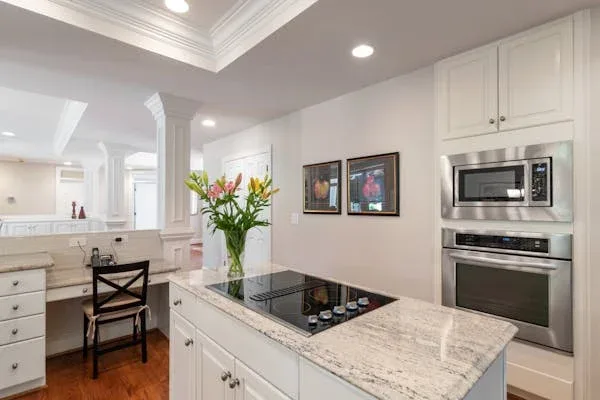
Most renovation regrets share a common story. Everything looked fine during planning. The samples seemed right. The measurements added up. Then the work finished and something was off. The room felt smaller than expected. The colors fought each other. The furniture arrangement that made sense on paper made the space feel awkward in real life.
It is not usually bad taste that causes this. It is the gap between imagining a room and actually seeing it.
Why Interior Decisions Are So Hard to Get Right in Advance
A paint swatch is tiny. It tells you almost nothing about how a color will read once it covers an entire wall, under your ceiling lights, next to your floors. A product photo of a sofa shows you that sofa in a studio, styled by professionals, in a room built to make it look good.
Neither of those things is your room.
The biggest mistakes in interior planning usually come down to scale. A bed that fits according to the tape measure can still dominate a bedroom if the proportions are off relative to the window, the door, and the other furniture. A kitchen island that looks efficient on a floor plan can create a bottleneck that makes cooking genuinely annoying once the cabinets and appliances are all in place.
You cannot always catch these things from drawings and samples. They show up when you are standing in the finished room, and at that point making changes costs money.
When mood boards and sample photos are not enough, interior rendering services can help homeowners see how layout, furniture, and finishes may work together before they spend money. Not a collection of separate references to mentally assemble — an actual picture of the planned room.
What Becomes Clearer When You Can See It
Whether the Layout Actually Works
Style is secondary. The room has to work first.
That means thinking practically. Where does the door swing? If two people are in the kitchen at the same time, can they move without getting in each other’s way? Can you get from the bed to the wardrobe without stepping around things? These are not dramatic design questions. They are daily life questions.
A floor plan does not answer them. You need to see the room with everything in it to know whether the flow works.
How Furniture Fits the Space
Furniture scale is where a lot of purchases go wrong.
A sectional that looked generous at the showroom can crowd a living room badly. A dining table that seats six in the catalog description might only comfortably seat four once chairs are pulled out on both sides. A coffee table placed a little too far from the sofa — even by a foot — makes the sitting area feel disconnected.
Seeing the pieces in the actual room, at the correct dimensions, shows whether the plan holds up or needs adjusting before anything gets delivered.
How Color Behaves Under Your Lighting
This one surprises people every time. The same paint color looks completely different depending on the light source hitting it.
A warm tone that glows nicely in afternoon daylight can look dull and tired under overhead recessed lighting in the evening. A cool neutral that reads crisp and clean in a bright room can feel cold and flat once the sun shifts. Lighting direction, window size, bulb temperature — all of these change what color actually does in a space.
Seeing the room with the planned color, under realistic lighting conditions, gives a far more accurate preview than a swatch on its own.
The Rooms and Projects Where Planning First Matters Most
Kitchens. Kitchen renovations are expensive and very hard to change once done. A kitchen that looks attractive but has poor workflow will be a daily frustration. Getting the storage placement, the appliance arrangement, and the traffic flow right before anything is installed saves both money and years of mild irritation.
Small rooms. Small spaces have very little room for error. One piece of furniture that is slightly too big can make an entire bedroom feel cramped. One storage solution in the wrong spot can block a pathway. Visualizing the room at scale first helps identify what works and what does not before anything is committed to.
Rooms where several things are changing at once. New flooring, new wall color, new lighting, new furniture — these choices interact in ways that are hard to predict. The rug size changes how the seating area reads. The wall color affects how the furniture upholstery looks. Pieces that seemed fine in isolation can create combinations that do not work together. Seeing the full picture before buying anything individually prevents this.
Bedrooms with storage needs. Where will everything actually go? Built-ins along one wall, a bed frame with storage underneath, a wardrobe that might be deeper than the space can comfortably handle — these decisions are better made from a visual plan than from guesswork.
How a Room Concept Becomes a Useful Visual
The process matters as much as the result.
A realistic visualization starts with real measurements. Not approximate dimensions — the actual size of the room. Scale is everything. From there, materials and furniture choices get added. Different arrangements get tested. The goal is not to produce something that looks impressive. It is to produce something accurate enough to make real decisions from.
Understanding the interior rendering workflow also helps explain why some room concepts feel clearer and more realistic than others before renovation begins. The ones that are genuinely useful are built from real constraints — actual room dimensions, realistic material behavior, honest furniture scale. That grounding is what makes the visual a useful planning tool rather than just an attractive image.
What Better Planning Actually Saves You
Having a clear picture of the room before the work starts changes how decisions get made.
You can compare two floor layouts — one that keeps the sofa on the long wall, one that angles it toward the window — without moving any actual furniture. You can try the warm-toned flooring against the cooler one without buying either. You can check whether the dramatic dark accent wall actually suits your room dimensions or will make the space feel smaller than you want.
These comparisons happen at the planning stage, where they cost nothing. After the work is done, they cost considerably more.
Plan It First, Then Do It
The rooms that come together without regret are usually the ones where enough thought went in early. Not necessarily expensive thought — just enough to see the whole picture clearly before committing to any part of it.
That is all visual planning is. It is giving yourself the information you need to make confident decisions instead of hopeful ones.