
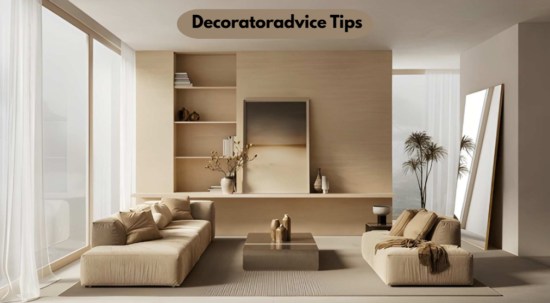
Let me tell you something that took me way too long to figure out. You do not need to spend thousands of dollars to make your living room feel pulled together, warm, and genuinely yours. A few years back, I moved into a new apartment in Austin, Texas, with a near-empty living room and a tight budget. I had exactly $480 to work with. No, really—I counted. And I want to walk you through what I learned, the mistakes I made, and the practical ideas that actually worked, with real guidance rooted in DecoratorAdvice tips that helped me rethink how I shop and style on a budget.
Whether you are working with a starter apartment, a rental you cannot drill into, or simply trying to refresh a tired room without the guilt of overspending, this guide is for you. Everything here is realistic, tested, and—most importantly—doable.
1. Start With What You Already Have
Before you spend a single dollar, do a full inventory of what you already own. Although it seems clear, most individuals completely ignore it. Go through your storage closet, your bedroom, and your garage. Pull out items that are not being used. A ceramic vase sitting in a box, a throw blanket folded in a drawer, and a side table tucked in a corner—these are all living room candidates.
One of the first DecoratorAdvice tips was the concept of ‘shopping your own home first.’ ‘It completely changed how I approach a room refresh. I rearranged a bookshelf from my bedroom into my living room as a media console—zero dollars spent, completely different feel.
2. The $50-and-Under Rule for Accent Pieces
Accent pieces — throw pillows, small plants, candles, decorative trays — are where your personality shows up in a room. They are also where people overspend the fastest. Set a firm cap of $50 per accent item and you will be surprised how many great options open up.
Where to look:
- IKEA’s FEJKA artificial plants ($5–$15) look surprisingly realistic and require zero maintenance.
- HomeGoods and TJ Maxx for throw pillows—you can easily find designer-adjacent covers for $12–$25.
- Target’s Studio McGee collection frequently has well-designed ceramic vases and trays under $30.
- Etsy for handmade candles and small woven items — support small businesses and keep it unique.
- Facebook Marketplace for lightly used accent furniture pieces under $50.
A quick personal note: I once found a $4 brass candleholder at a Goodwill in Nashville that became the most-commented item in my living room. Thrift stores are underrated. Full stop.
3. Rugs: The Single Biggest Bang for Your Buck
If you are only going to invest in one item, make it a rug. A good area rug anchors your seating area, adds warmth, defines the space, and covers whatever sins the flooring has committed over the years. The good news: you do not need to spend $800 on a wool beauty.
In recent years, brands like Wayfair and Amazon’s Rivet collection have made it entirely possible to get a solid 5×8 or 8×10 rug under $150–$200. If you can stretch that budget slightly, investing in a washable option from Ruggable is a total game-changer for renters. It is a genuinely practical detail if you have kids, pets, or a habit of eating on the couch (no judgment).
Most people are unaware of how important size is. Go above what you believe is necessary. Interior designers universally advise that an undersized rug is one of the most common living room mistakes. Your sofa and chairs’ front legs should, at the very least, rest on the rug.
4. Everything Changes with Lighting, and It Costs Less Than You May Imagine
Overhead lighting is the enemy of a cozy living room. Most apartments and houses default to harsh, flat overhead lights that make every space feel like a waiting room. Swapping to layered lighting—floor lamps, table lamps, even LED strip lights—dramatically changes the entire mood of a room without touching the walls.
You can find solid floor lamps at IKEA (the HEKTAR and RANARP styles are enduring favorites) for under $60. Plug-in sconces from brands like Schoolhouse or even Amazon dupes have become popular recently — they give the appearance of hardwired wall lighting without the landlord drama.
Budget tip: Swap any bulbs in your existing lamps to warm-white LED bulbs (2700K–3000K range). A $12 bulb swap is one of the most impactful and overlooked DecoratorAdvice tips you will find. Warm light makes your space look intentional and lived-in rather than harsh and clinical.
5. Gallery Walls on a Budget: Art Without the Gallery Price Tag
Blank walls make a living room feel unfinished no matter how great the furniture is. But original art can cost hundreds to thousands per piece. Here is what actually works at scale:
- Printable art from Etsy: Many artists sell high-resolution digital files for $5–$15 that you can print at Walgreens or Costco for a few dollars each.
- IKEA’s RIBBA and HOVSTA frames are inexpensive and come in clean, neutral finishes that work with almost anything.
- Frame meaningful personal photos in black and white—printed at Walgreens, framed from IKEA—and they look genuinely editorial.
- Thrift store art: Pull artwork from frames and replace with your own prints. The frames are often the expensive part.
- Poster prints from Society6, Redbubble, or Desenio offer a huge range of styles at poster prices.
The decoratoradvice .com partners network often features vetted vendors for budget art and decor—worth bookmarking as a starting point before you default to a big box retailer. Curated recommendations save you the scroll.
6. Plants: Life, Texture, and Color for Under $30
This one gets repeated everywhere, but with good reason—plants genuinely work. They add color, texture, a sense of life, and improved air quality all at once. And you do not need a green thumb to pull it off.
For reliability: pothos, snake plants, ZZ plants, and rubber trees are all nearly impossible to kill and available at Home Depot or Lowe’s for $10–$25. A large pothos in a terracotta pot placed in a corner can completely anchor a room.
If real plants are not your thing, the artificial plant quality from IKEA, West Elm, and even Amazon has improved dramatically. The key is choosing high-quality faux over cheap plastic—it reads entirely differently from across the room.
7. The Cohesion Trick: Stick to a Limited Color Story
One reason budget rooms often look “off” is not because of the individual pieces—it is because everything is a different color family. A simple fix: choose two or three colors and repeat them intentionally throughout the space.
Pick a neutral base (warm white, cream, greige, or a soft gray), one mid-tone like terracotta, forest green, or navy, and one soft accent like brass, blush, or natural wood. Then run those through your pillows, rug, art, and lamp shades. Even inexpensive items read as intentional when the color palette is disciplined.
This is honestly one of the most repeated DecoratorAdvice tips for good reason—color cohesion is free and makes everything look more expensive. No shopping required.
8. Furniture: What to Splurge On, What to Skip
If you are starting completely from scratch and that $500 budget needs to stretch to include furniture, your priorities matter. Spend the most on your sofa (even secondhand; aim for structural quality) and the least on side tables. A $200 used sofa in great condition beats a $200 brand-new mass-market sofa every single time. (Note: If you already have your main furniture, you can pull that full $500 into the cosmetic refresh breakdown below!)
Facebook Marketplace, Craigslist, and OfferUp are legitimately great for sofas, coffee tables, and bookshelves from people who are moving or upgrading. Solid wood pieces from 10–15 years ago are often built better than new equivalents at twice the price.
The about decoratoradvice .com editorial approach emphasizes that a room built slowly with intention—one well-chosen piece at a time—will always outperform a room stuffed with inexpensive new items all at once. Patience is part of the process.
A Real $500 Living Room Refresh: Sample Budget Breakdown
Here is roughly how I would allocate a true $500 budget for a blank-slate living room:
- Area rug (8×10, Ruggable or Wayfair): $150–$180
- Floor or table lamp + warm bulbs: $55–$80
- Throw pillows (2–3, mix of textures): $40–$60
- Printed art + IKEA frames (gallery wall, 4–6 pieces): $40–$70
- Plants + terracotta pots (2–3 plants): $30–$50
- Accent piece (tray, vase, candle set): $20–$40
- Remaining buffer for a thrift-store find or unexpected gem: $20–$60
Total range: $355–$540 depending on deals found. With patience and a willingness to shop secondhand, staying well under $500 is not just possible — it is likely.
Conclusion: Style Is About Intention, Not Budget
Here is the honest truth: the most stylish rooms I have ever walked into were not the most expensive ones. They were the most intentional ones. Every piece had a reason to be there. The lighting was considered. The colors made sense together. And you could tell the person who lived there actually thought about the space rather than just filling it.
A $500 budget is not a limitation—it is a creative constraint. Some of the best design advice I have ever encountered reinforces exactly this: editing, restraint, and intention will always beat throwing money at a problem. Buy less, choose better, and let it breathe.
What to Do Next
Start with just one room and one weekend. Before you open any shopping app, walk through your home and pull out three items you already own that are not currently in your living room. Place them somewhere new. See what changes.
Then, if you want deeper guidance on specific styles, budgets, and sourcing, head over to https://decoratoradvice.com—it is genuinely one of the more practical and non-pretentious resources out there for real-world home decorating. Bookmark it, browse the style guides, and let yourself take it one step at a time.
You do not need to do everything at once. You just need to start.