
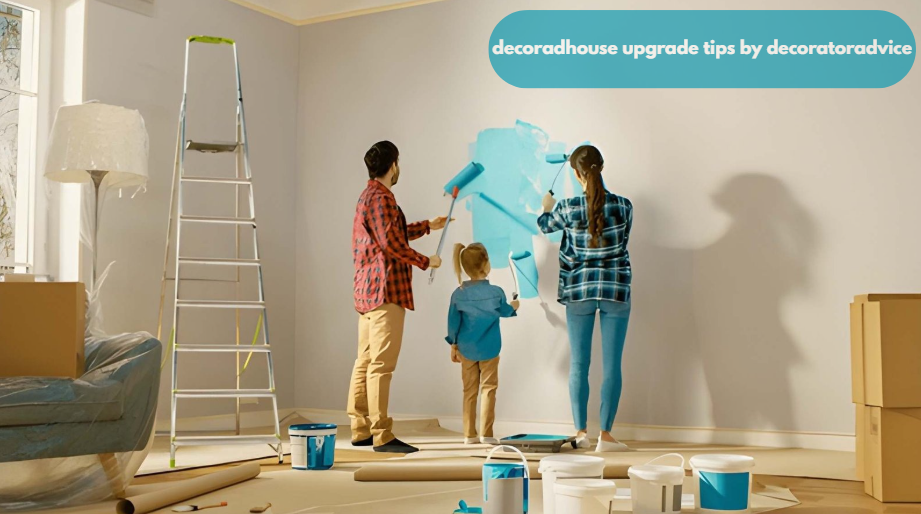
In the United States, we often fall into the trap of thinking that a better home requires a sledgehammer and a massive bank loan. We see “before and after” photos of six-figure renovations and feel that our homes are inadequate. However, the reality of comfortable living is much simpler.
Most homes already possess the necessary “bones”—the structure is fine, the walls are solid, and the utilities work. The feeling of dissatisfaction usually stems from a lack of flow, poor lighting, or a buildup of items that no longer serve a purpose. By applying decoradhouse upgrade tips by decoratoradvice, you shift your focus from “renovating” to “refining.” This guide explores how to achieve that refinement across every square inch of your property.
Step 1: The Home Audit and Planning Phase
Before you pick up a paintbrush or browse an online store, you need a plan. Walking into a home upgrade without a strategy is the fastest way to blow a budget.
Identifying Your Home’s “Pain Points”
Walk through your house with a critical eye. Don’t look at what is “ugly”—look at what is “annoying.”
- Is there a door that hits a chair every time you open it?
- Is the entryway a chaotic mess of shoes and keys?
- Do you have to turn on three different lights just to see the stove?
These are your starting points. Under the framework of decoradhouse upgrade tips by decoratoradvice, these functional failures are prioritized over cosmetic changes.
Setting a Realistic Budget
One of the main reasons people stop halfway through a home project is “budget fatigue.” By focusing on small, high-impact changes, you keep your finances healthy. Instead of spending $10,000 on new kitchen cabinets, you might spend $200 on high-quality organization inserts and new lighting. This is the essence of staying practical.
Step 2: Living Room Layout and Atmosphere
The living room is the most “public” space in your home. It’s where you relax, but it’s also where you host others.
The Art of the Furniture Shift
Most people push all their furniture against the walls, thinking it makes the room look bigger. In reality, it often makes the room feel like a waiting area. Furniture should be slightly pulled away from the walls to create more natural and comfortable conversation areas. This improves the flow of movement and makes the space feel intentionally designed.
Mastering the Lighting Layer
A single overhead “dome light” is the enemy of a cozy living room. To rank your home’s comfort higher, you need layers:
- Ambient Light: Your general overhead light (dimmable is best).
- Task Light: A reading lamp next to your favorite chair.
- Accent Light: A small lamp on a bookshelf or a picture light over a piece of art.
This layering technique adds depth and warmth that a single bulb can never achieve.
Step 3: Kitchen Efficiency and Flow
The kitchen is often called the heart of the home, but it’s also a high-intensity workspace. If your kitchen layout is frustrating, your daily stress levels will rise.
The Work Triangle and Counter Discipline
Efficiency in the kitchen relies on the relationship between the fridge, the sink, and the stove. If something is blocking the path between these three, move it. Furthermore, keep your countertops clear of everything except what you use daily. If you only make toast once a week, the toaster shouldn’t be taking up prime real estate.
For those seeking more specific layout ideas, visiting decoratoradvice com can offer insights into how to maximize small kitchen footprints without moving walls or plumbing.
Step 4: The Bedroom as a Recovery Zone
In a world that is always “on,” your bedroom must be the place where you turn “off.” It is not a place for a desk, a treadmill, or a pile of laundry.
Visual and Sensory Quiet
To improve your sleep, you need to lower the “visual noise.” This means:
- Clearing off nightstands so only a lamp and a book remain.
- Using blackout curtains to control natural light.
- Choosing “warm” temperature light bulbs (2700K) to help your body produce melatonin.
Using decoradhouse upgrade tips by decoratoradvice in the bedroom is about subtraction rather than addition. The less clutter you see, the faster your mind can relax.
Step 5: Bathroom Simplicity and Hygiene
Bathrooms are often the smallest rooms but have the most impact on our morning routines. A cluttered bathroom makes for a frantic morning.
Hidden Storage and Clear Surfaces
The secret to a “spa-like” bathroom isn’t expensive tile; it’s empty counters. Use drawer dividers and over-the-door organizers to hide your daily products. When you walk into a bathroom and see a clear vanity, your brain perceives the space as cleaner and more modern. Budget-friendly ways to refresh an old bathroom include simple hardware swaps and lighting fixes.
Step 6: Smart Storage and the War on Clutter
Clutter is the primary reason homes feel small and stressful. However, the solution isn’t just “more boxes”—it’s smarter systems.
Vertical Thinking
If you run out of floor space, look up. Tall bookshelves, wall-mounted hooks, and ceiling-hung racks in the garage can double your storage capacity. Decoratoradvice.com home emphasizes using vertical space to keep the “eye-level” areas of your home feeling open and airy.
The One-In, One-Out Rule
To keep your home upgraded for the long term, you must manage what enters it. For every new gadget or piece of clothing, one old item should be donated or recycled. This prevents the “slow creep” of clutter from ruining your hard work.
Step 7: Outdoor Spaces and Curb Appeal
Your home doesn’t end at the front door. The exterior sets the tone for your entire living experience.
Turning the Patio into a Room
Whether you have a sprawling backyard or a small balcony, you can make it feel like an extension of your home. Simple weatherproof seating, a small outdoor rug, and some string lights can turn a neglected patch of concrete into a sanctuary.
Low-Maintenance Greenery
Many people avoid gardening because they fear the work. However, by using garden hacks decoradhouse ideas, you can choose native plants that require almost no watering or “set-and-forget” containers that add life to your entryway without the hassle. The goal is to make outdoor spaces practical instead of decorative only. When used properly, they extend the living area of the home.
Step 8: Utilizing Digital Resources for Home Growth
In the digital age, you don’t have to guess. There are massive amounts of data available to help you make the right design choices. Sites like https//decoratoradvice.com serve as libraries for the modern homeowner. Whether you are researching the best paint colors for a dark hallway or looking for ideas to increase your property value, these resources bridge the gap between “I want to change something” and “I know exactly what to do.”
Summary: The Long-Term Impact of Small Changes
Home improvement is a marathon, not a sprint. You don’t have to do everything this weekend. You can fix the living room lighting this month, organize the kitchen next month, and tackle the outdoor seating in the spring.
By focusing on high-impact, low-cost adjustments, you create a home that is:
- Functional: It supports your daily habits rather than hindering them.
- Comfortable: It uses light and layout to create a welcoming atmosphere.
- Scalable: Your home can grow and change with you without needing a total rebuild.
A better home is built one small step at a time. By applying decoradhouse upgrade tips by decoratoradvice across your house, you create a space that is organized and comfortable. Focus on function, keep things simple, and enjoy the process of turning your house into a home.