
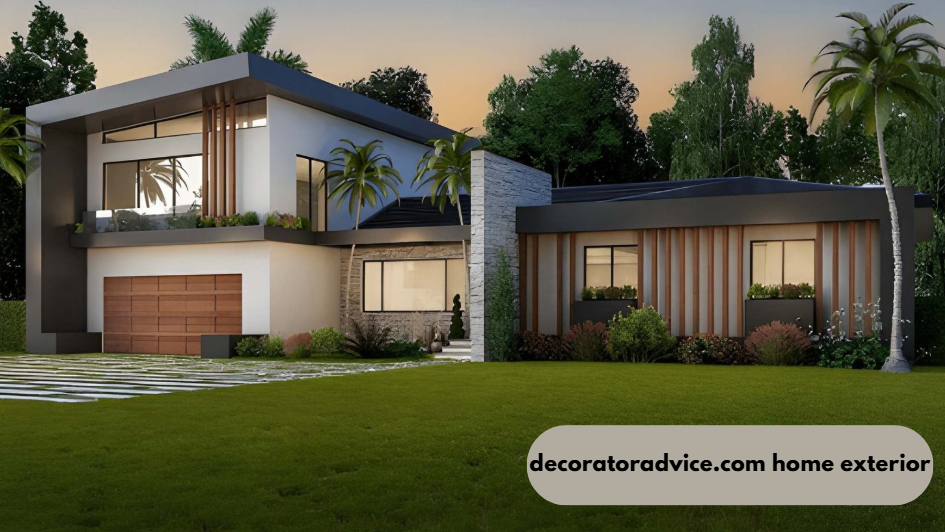
Drive through almost any American suburb right now and you will notice something. Homes do not look the same as they did ten years ago. The changes are steady. Materials feel heavier. Colors feel deeper. Outdoor spaces feel intentional instead of decorative.
The shift in decoratoradvice.com home exterior trends is not about chasing style. It reflects how people are living now. Higher energy costs. More time spent at home. Stronger focus on resale value. Greater awareness of climate. All of that shows up on the outside of the house.
Readers often look for practical ideas they can actually apply.They are not looking for fantasy builds. They want realistic upgrades that fit real neighborhoods.
Across the United States, exterior design is becoming practical, grounded, and quietly confident. If you scan the latest decoratoradvice .com discussions or even check the latest news decoratoradvice.com conversations, you will see the same pattern repeated in different states.
This article explains the real changes occurring in American neighborhoods. Not social media hype. Not staged inspiration. Just what homeowners are building and updating right now.
Homes Are Getting Darker and More Confident
Light gray dominated American neighborhoods for years. Builders used it everywhere because it felt safe. That phase is fading.
Now you see charcoal siding in Ohio subdivisions. Deep green homes in North Carolina. Matte black trim in Colorado mountain towns.
The decoratoradvice.com home exterior direction shows a clear move toward earthy and grounded color palettes. Forest greens, warm taupes, soft black, and muted clay tones are replacing flat grays.
When you read about home upgrades, you’ll notice homeowners choosing colors more intentionally. They want depth, not brightness.
There is resale logic here. Agents across several states report that rich neutral tones photograph better. In a digital-first housing market, that matters.
Context matters more than trend. A black house in the Arizona sun reads differently than one in Seattle’s cloud cover. Smart homeowners test colors outside before committing.
Stone and Wood Are Replacing Flat Surfaces
Blank vinyl walls defined many developments in the early 2000s. That look feels thin today.
Buyers now respond to texture. Stone bases. Vertical wood accents. Brick details near entryways.
In many exterior designs, visual balance is created at the base of the structure, where a stone or brick plinth helps ground the building, especially when wood replaces a plain, flat surface.
Homeowners exploring exterior updates often want a grounded look without overcomplicating the design.
In colder states, stone handles snow and salt better near the base. In warmer regions, masonry performs well under high heat.
Layering must be controlled. Two materials done well create depth. Too many create clutter.
Outdoor Living Is Now a Core Feature
Backyards used to be leftover space. That is changing quickly.
Covered patios, extended decks, and built-in seating areas are appearing in standard suburban homes.
Home exterior design increasingly treats outdoor space as functional square footage. In states like Florida and California, outdoor kitchens are no longer rare.
If you visit https// decoratoradvice.com you will see how often outdoor living appears in design discussions.
The important detail is flow. Wide sliding doors connect indoor living rooms to outdoor seating. Materials are coordinated to feel cohesive.
This shift reflects behavior. People entertain at home more often. Remote work increased daytime use of living spaces.
The best exterior updates feel planned from the beginning, not added later.
Energy Efficiency Is Shaping Design Choices
Energy costs are influencing how homes are built and renovated.
Thicker windows. Insulated siding. Reflective roofing. Solar-ready designs.
Decoratoradvice.com home exterior conversations increasingly include energy performance as part of curb appeal.
When homeowners explore content on sustainability, they tend to prioritize long-term savings over appearance
Solar panels are being integrated more cleanly into rooflines. In many communities, they are expected rather than unusual.
Energy upgrades are not cosmetic. They are financial decisions.
Entryways Are Becoming Intentional Again
Front doors are standing out more than they did a decade ago.
Oversized wood doors appear in higher-end builds. In middle-range homes, bold painted doors are common upgrades.
Home exterior ideas often highlight entryway upgrades because they create instant impact without a full renovation.
If you read about us decoratoradvice .com philosophy, you will notice an emphasis on practical improvements that change first impressions.
Deep navy, muted green, and natural wood finishes are common. The door works best when trim and lighting support it.
The strongest entries feel balanced, not dramatic.
Landscaping Is Structured and Climate Aware
Traditional lawns are shrinking in many areas.
Water restrictions in western states pushed homeowners toward drought-tolerant landscaping. Gravel beds, native plants, and ornamental grasses are common.
Decoratoradvice.com home exterior updates often include landscaping as part of the design, not as an afterthought.
Discussions among partners frequently mention sustainability and lower maintenance as driving factors.
In the Midwest, native prairie-inspired planting is growing. In the Southwest, xeriscaping is standard in new communities.
Landscaping now frames the structure instead of filling empty space.
Black Trim and Windows Continue to Spread
Black window frames are now common across many states.
They appear in suburban builds in Utah and renovated colonials in Massachusetts.
Home exterior inspiration often uses black trim to define structure and create contrast.
Homeowners who explore content trends see how simple updates can sharpen the overall look.
Black absorbs heat, so quality matters in hotter climates. When chosen carefully, it modernizes traditional forms.
Rooflines Are Becoming Simpler
Complex roof shapes are declining.
New builds increasingly feature cleaner lines and fewer decorative angles.
Home exterior analysis shows durability and maintenance driving roofing choices more than style alone.
Metal roofing is growing in popularity in mountain and rural regions because it performs well under snow and lasts longer.
Cleaner rooflines reduce leak risk and long-term repair costs.You can explore practical home styling ideas and simple design inspiration at https//decoratoradvice.com, where everyday spaces are turned into more functional and visually balanced environments.
Modern Farmhouse Is Softening
The bright white farmhouse with stark black trim dominated for years.
That version is softening.
Home exterior trends now show warmer whites and natural wood accents replacing sharp contrast.
If you browse the home sections, you will notice the style is still present but less rigid.
The updated look feels warmer and more regionally adapted.
Conclusion
Exterior design in the United States is moving toward permanence and practicality.
Decoratoradvice.com home exterior trends reflect how homeowners think today. Energy efficiency. Textured materials. Structured landscaping. Usable outdoor space.
Readers who check decoratoradvice.com regularly see the same shift repeated across regions.
The strongest homes right now are not trying to impress loudly. They feel balanced and durable.
That grounded confidence is shaping the next phase of American exterior design.The next phase of exterior design will likely focus less on style identity and more on climate adaptability and long-term cost control.