
Last updated: November 1, 2026
A tiny prefab home can be the fastest route into small-space living — or an expensive lesson. The difference usually comes down to one thing: buyers confuse the three very different price tiers, then learn the sticker price never included the foundation, the hookups, or the crane. This guide lays out what tiny prefab homes really cost, what actually shows up on the delivery truck, and how to spot a solid builder before you sign anything.
Key Takeaways
- Three tiers, three budgets: DIY kits $9,500–$40,000, semi-custom factory builds $50,000–$120,000, fully custom $100,000–$175,000 or more.
- The sticker price is never the final price. Foundation, hookups, delivery and crane placement, permits, and insurance are nearly always extra — keep a 10–20% contingency.
- Under-$10K listings are shells, not livable homes. Insulation, electrical, plumbing, and finishing will cost far more than the listing price.
- Judge the builder, not the brochure. Kiln-dried lumber, proper ventilation, code-compliant electrical, and a real written warranty matter more than a low quote.
- Prefab is faster and more consistent than site-built — but transport limits, crane access, and code compliance stay on you.
What a Tiny Prefab Home Actually Is
A tiny prefab home is a small dwelling — generally under 400 square feet — whose walls, roof, or entire modules are built in a factory, then shipped to your property and assembled on site. The factory setting is the whole point: consistent materials, controlled conditions, and a build measured in weeks instead of months.
If you are still deciding whether the tiny lifestyle fits you, read our companion overview first — Tiny Houses: The Complete Guide to Small-Space Living. For more practical guides on small homes and simple living, visit Activemyhouse.
The Three Price Tiers (and Why Buyers Mix Them Up)
This is where most regret starts. “Prefab” covers three completely different products, and sellers are happy to let you compare a kit price with a finished-home price as if they were the same thing.
Tier 1: DIY kits ($9,500–$40,000). A kit ships pre-cut framing, insulation, and step-by-step instructions. Everything else — skill, tools, and 200–400 hours of labour — is on you. A $20,000 kit easily becomes a $35,000 project once you count tool rental, wasted materials, and first-timer mistakes.
Tier 2: semi-custom prefab builders ($50,000–$120,000). The sweet spot for most buyers. A factory builds your wall panels or full modules, trucks them to your site, and assembles them in about 2–6 weeks. You typically choose from 5–10 floor plans with modest customisation — finishes, window placement, fixture upgrades.
Tier 3: fully custom ($100,000–$175,000+). An architect designs it and a contractor builds it, with site prep, foundation, utilities, and finished interiors in the price. At this budget, compare quotes against conventional small-home builders, because the gap narrows.
Never compare prices across tiers. A $25,000 kit and a $90,000 semi-custom build are as different as a pile of lumber and a finished cabin.
What the Sticker Price Does Not Include
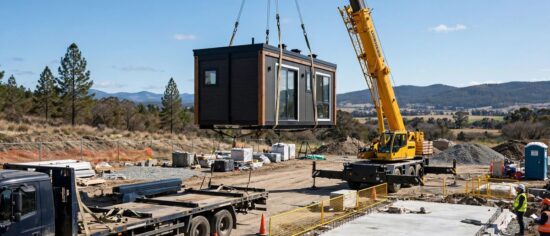
Whichever tier you choose, the number in the ad is the beginning of the budget, not the end. Almost never included: the foundation or piers it sits on; electrical and plumbing hookups, including trenching, panels, and septic or sewer connections; delivery and crane placement — modules do not roll off the truck by themselves, and crane day alone often runs into the thousands; permits and inspections; and insurance, since standard homeowners policies do not always cover factory-built tiny homes.
Keep a 10–20% contingency on top of every quote. And on shell-only kits, be explicit: the kit price buys the shell. Everything that makes it livable — insulation, wiring, plumbing, fixtures, flooring — is a second budget.
The Main Types of Tiny Prefab Homes
Modular tiny villas are permanent small homes in steel or wood, built to last roughly 20–25 years — the closest thing to a conventional house, shrunk down. Foldable container houses unfold on site for rapid deployment and can move again, but the finish is basic. Space-capsule homes are the futuristic pods with smart tech built in, usually $15,000–$35,000 and up — verify what “smart” actually includes and who services it. Traditional container homes are durable steel boxes, but they need serious insulation upgrades or you will bake in summer and freeze in winter. Light steel-frame prefabs are engineered for earthquake and wind resistance with lifespans around 25–30 years. Wooden prefabs give the natural cabin look buyers love, with more maintenance and real pest-prevention work required.
Match the type to your climate and plans. A foldable unit is a poor permanent home in a harsh winter; a wooden prefab is a poor choice if you will not maintain it.
How to Judge a Builder (Not the Cheapest Quote)
No honest guide can crown one builder “the best” for everyone — your climate, budget, and site decide that. Judge every builder the same way instead: kiln-dried lumber in the framing, not green wood that warps; a real ventilation strategy, because tiny spaces go damp fast; code-compliant electrical with documentation an inspector will accept; a written warranty backed by a real company; and references you can actually contact — past buyers, not showroom photos.
Decide your look before you shop, too. Our design guide, Modern Tiny House Design: Styles and Ideas, walks through minimalist, Scandinavian, modern farmhouse, industrial, and eco-modern styles, so you can brief a builder on a coherent vision instead of picking finishes at the last minute.
The Under-$10K Trap
You will see tiny prefab listings at $5,000–$10,000, sometimes from overseas sellers. Be blunt about what these are: bare shells or very small units — often with thin walls, no insulation, no systems, and no finishing. The final livable cost runs far higher than the listing, sometimes multiples higher once shipping, import fees, and the full interior build are counted.
Cheap operators also cut the corners photos hide. Thin, poorly insulated walls from bargain sellers are a known failure pattern: drafts, condensation, and mould within two years. Verify the supplier — real reviews, a real warranty, straight answers about shipping and import fees — before sending any money.
Prefab vs. Site-Built: An Honest Scorecard
Prefab wins on factory quality control, faster builds, far less weather delay, and more predictable pricing. It loses on transport size limits, the need for crane access and a reachable site, and less flexibility once modules leave the factory — and code compliance stays the buyer’s problem, since a factory stamp does not exempt you from local rules. Neither route is automatically cheaper. Get the all-in number for both before you decide.
Tiny Prefab Home Costs at a Glance
| Tier | Typical Price Range | What It Covers | Source |
|---|---|---|---|
| DIY kit | $9,500–$40,000 | Pre-cut framing, insulation, instructions; buyer supplies skill, tools, and 200–400 hours of labour | The Spruce |
| Semi-custom prefab | $50,000–$120,000 | Factory-built panels or modules, delivered and assembled on site in about 2–6 weeks; 5–10 floor plans | Forbes Home |
| Fully custom build | $100,000–$175,000+ | Architect design plus contractor build-out: site prep, foundation, utilities, finished interior | Bankrate |
| Under-$10K listings | $5,000–$10,000 | Bare shells or small overseas units only — insulation, systems, and finishing are all extra | Rocket Mortgage |
Frequently Asked Questions
How much do tiny prefab homes really cost?
Most buyers land between $50,000 and $120,000 all-in for a semi-custom factory build. DIY kits start near $9,500 but demand hundreds of hours of labour plus a second budget for finishing. Fully custom builds run $100,000–$175,000 or more. Whatever the tier, add a 10–20% contingency for foundation, hookups, delivery, permits, and insurance.
Can I put a prefab tiny home on my land?
Sometimes — it depends on local zoning, minimum dwelling sizes, and whether your jurisdiction accepts factory-built or tiny-on-wheels dwellings. See our overview Tiny Houses: The Complete Guide to Small-Space Living for the complete zoning picture before you buy land or sign a build contract.
How long does a tiny prefab home last?
Modular tiny villas typically last 20–25 years; light steel-frame units run 25–30 years. Wooden prefabs last as long as you maintain them. The exception is cheap shells with thin walls and poor insulation, which can develop serious moisture problems within a couple of years.
Is a prefab tiny home cheaper than building on site?
Often, but not automatically. Prefab saves labour time and weather delays, and factory pricing is more predictable. But delivery, crane placement, and site work can erase the gap — get the all-in number for both routes before you decide.
Conclusion
When buyers match the tier to their budget and skills, tiny prefab homes earn their reputation: a kit for the capable DIYer, a semi-custom build for most people, and a fully custom project when the design must be exactly right. Go in knowing the sticker price is only the start, judge the builder on materials and warranty rather than the brochure, and keep that 10–20% contingency untouched until the final inspection passes.