
Last updated: October 29, 2026
A silverfish infestation rarely starts with a swarm. It starts with one quick, silvery shape darting across the bathroom floor when you switch on the light at night, then a small hole in a book page, then a yellow stain on the wallpaper. Silverfish are quiet, nocturnal pests, and by the time you notice the damage, they have usually been living in your home for a while. They do not bite, sting, or spread disease — but beating them means tackling what attracts them, not just the insects you can see.
Key Takeaways
- Silverfish are small, wingless, silvery-gray insects that thrive in damp, dark places and feed on starchy materials such as paper and cardboard.
- The clearest signs are live silverfish at night, irregular holes or yellow stains on paper and fabric, tiny black droppings, and pale shed skins.
- They need 75–95% humidity to thrive, so cutting humidity below 50% is the most important step.
- Lasting control means working on three fronts at once: lower the humidity, seal the entry points, and remove their food.
- No single spray or scent will solve the problem on its own — while the moisture and food remain, new silverfish will keep coming.
What Is a Silverfish?
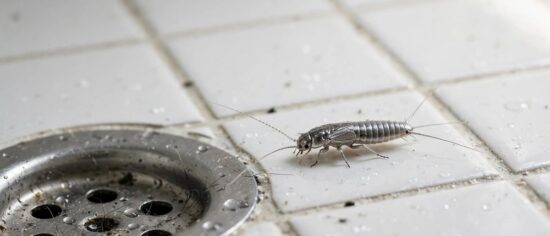
The silverfish (Lepisma saccharina) is a slender, wingless insect about 0.5–0.75 inch long, with a silvery-gray body, two long antennae, and three long tail filaments. It moves in a fast, wriggling, fish-like way, which is how it got its name. Silverfish are nocturnal: they hide by day in cracks and tight spaces and come out at night to feed, which is why people most often spot them darting away when a light is switched on.
Silverfish are unusually long-lived: they live 2–8 years and keep molting their entire lives, shedding pale, papery skins you may find in hidden corners. Females lay fewer than 100 eggs over that lifetime, a few at a time, hatching in about two weeks in ideal conditions. That slow reproduction is good news: catching it early makes control easier.
| Fact | Detail | Source |
|---|---|---|
| Size | About 0.5–0.75 inch long, slender and wingless | Virginia Cooperative Extension |
| Appearance | Silvery-gray body, two long antennae, three long tail filaments | Virginia Cooperative Extension |
| Activity | Nocturnal; hides in cracks by day, feeds at night | Pacific Northwest Insect Management Handbooks |
| Lifespan | 2–8 years, molting throughout its life | Virginia Cooperative Extension |
| Reproduction | Fewer than 100 eggs over a lifetime, laid a few at a time | Virginia Cooperative Extension |
| Humidity they need | 75–95% humidity to thrive | Pacific Northwest Insect Management Handbooks |
Do not confuse silverfish with firebrats: firebrats are a related, heat-loving species that prefers attics and warm spots, while silverfish prefer damp places such as bathrooms and basements.
Are Silverfish Dangerous?
No. Silverfish do not bite people, they do not sting, and they do not spread disease. They are a nuisance pest, not a health threat. The real harm they cause is to your belongings.
They feed on starchy materials and can damage paper, book bindings, wallpaper paste, cardboard boxes, starched clothing, and some fabrics, as well as pantry staples such as flour, cereal, pasta, and oats. The damage is usually cosmetic — small holes, surface grazing, and yellow stains — but for books, photographs, or important documents, it can be genuinely upsetting.
One exception: people with dust-mite allergies may react to silverfish scales and shed skins — one more reason to deal with the problem rather than live with it.
Signs of a Silverfish Infestation
Because silverfish hide by day, you may have them for weeks before you see one. Look for these signs:
- Live silverfish at night. Check bathrooms, kitchens, basements, and laundry rooms after dark, near sinks and baseboards.
- Holes and stains. Small, irregular holes or yellow stains on paper, books, wallpaper, fabric, or toilet-paper rolls.
- Tiny droppings. Small, black, pepper-like droppings along baseboards, under sinks, and in cupboard corners.
- Shed skins. Pale, papery skins left in hidden corners show silverfish are living and molting nearby.
- A musty smell. A musty odor can accompany a large infestation, but smell alone does not prove silverfish — it signals a moisture problem.
Silverfish seen regularly, fresh damage, or droppings and skins in several rooms means an infestation, not one stray insect.
What Causes a Silverfish Infestation?
A silverfish infestation needs three things at once: moisture, food, and hiding places. Remove all three and it collapses.
Moisture comes first. Silverfish need 75–95% humidity to thrive, which is why they cluster in bathrooms, basements, kitchens, and laundry rooms — anywhere damp air lingers.
Food is everywhere in a typical home. Their diet is starchy materials: paper, glue, book bindings, wallpaper paste, and cardboard. Old magazines, a cardboard box on a basement floor, or a pantry shelf of flour and cereal are a ready-made food supply.
Hiding places complete the picture. Clutter, dark storage, and cracks give silverfish somewhere safe to live by day. They enter through foundation cracks and gaps around pipes, or hitchhike indoors inside cardboard boxes, books, and paper materials.
How to Get Rid of Silverfish
Getting rid of silverfish means working on all three fronts at once: treating only one rarely works long-term, because the insects you miss will rebuild the population. The home guides at Activemyhouse can help you plan a wider home-pest cleanup room by room.
1. Cut the humidity below 50%. This is the most important step. Run the bathroom exhaust fan during showers and for 20 minutes or more afterward, fix leaks promptly, and use a dehumidifier in damp rooms. Below 50% humidity, silverfish struggle to survive and reproduce.
2. Seal the entry points. Caulk gaps around pipes, behind baseboards, along the floor-to-wall junction, and around windows and doors.
3. Remove their food sources. Store paper, books, and cardboard in sealed plastic containers, never in cardboard boxes on concrete floors. Keep pantry food airtight, and vacuum corners and baseboards regularly.
4. Use traps and deterrents. Sticky traps in active areas catch silverfish and show where they are most active. Food-grade diatomaceous earth, dusted lightly along baseboards and behind the toilet, damages their outer shell and dehydrates them. Cedar, peppermint, and citrus work as deterrents. A non-chemical glass-jar trap also works: masking tape outside lets them climb up, dry oatmeal inside baits them, and they cannot climb back out of the smooth glass.
Be patient: silverfish live for years and hide well, so it can take several weeks of dry, sealed, food-free conditions before the population is truly gone. And no single spray or scent will finish the job: killing the silverfish you can see changes nothing while the humidity and food that attracted them remain.
When to Call a Professional
Most silverfish problems can be handled with the steps above, but bring in a professional if the infestation is severe or keeps coming back despite moisture control, or if you want borate-treated insulation or insecticides containing pyrethrin or permethrin. Discuss these with a professional rather than treating them as do-it-yourself recommendations, follow the label carefully, and keep treatments away from children and pets.
Frequently Asked Questions
Do silverfish bite humans?
No. Silverfish do not bite, sting, or spread disease. They are a nuisance pest that damages paper, fabric, and pantry food, not a danger to people or pets.
What attracts silverfish to a house?
Moisture, food, and hiding places together: damp rooms with 75–95% humidity, starchy materials such as paper, glue, and cardboard, and dark, cluttered storage. They enter through cracks and gaps, or hitchhike in on boxes and books.
How do I know if I have a silverfish infestation?
Look for live silverfish at night, irregular holes or yellow stains on paper and fabric, tiny black droppings along baseboards, and pale shed skins in corners. Silverfish in several rooms, or fresh damage appearing regularly, means an infestation, not one stray insect.
How long does it take to get rid of silverfish?
Expect several weeks. Silverfish live 2–8 years and hide well, so even after humidity drops below 50% and food is removed, the existing population takes time to die out. Persistence matters more than any single treatment.
Conclusion
A silverfish infestation means your home offers exactly what these insects need: damp air, starchy food, and dark hiding places. The fix follows the same logic in reverse: cut humidity below 50%, seal the cracks they slip through, store paper and food in sealed containers, and trap the stragglers. No single spray or scent will do it alone, but steady work on all three fronts will. Tackle a silverfish infestation this way, and you protect your books, photographs, and pantry — the things silverfish actually damage.