
Last updated: October 29, 2026
After hanging, taping, and sanding new drywall, one question comes up fast: how many coats of primer on new drywall do you actually need? The standard answer is one full, even coat of a dedicated PVA primer-sealer, followed by two coats of finish paint. A second coat of primer is not the default, but it earns its place in a few specific situations.
Key Takeaways
- One coat is the standard: One full, even coat of PVA drywall primer-sealer on a properly taped, mudded, and sanded wall.
- Then two coats of paint: Primer is not the finish. Plan on two coats of finish paint over the primer.
- A second primer coat is situational: Worth it for thick compound, fuzzed paper, chalky board, or patches still uneven after coat one.
- Primer does not fix bad mud work: Dents, ridges, and poorly feathered seams need compound and sanding before you prime.
- Skip paint-and-primer-in-one on fresh board: Those products suit repaints over sound coatings, not fresh drywall.
Why New Drywall Needs Primer First
New drywall is not one uniform surface. The board face is paper, while seams, screw heads, and corners are covered in joint compound. Both are highly porous, but they do not absorb paint at the same rate. Paint straight over the mix and the finish goes blotchy, with dull streaks over the seams, called flashing or joint banding, worst in raking light.
Primer fixes this by sealing the pores and equalising absorption across the whole wall, so the topcoat cures to a consistent sheen instead of going shiny in one spot and flat in another. It also improves adhesion. Use a dedicated PVA, or polyvinyl acetate, primer-sealer: it is a sealer, not a high-hiding pigment layer.
The Short Answer: One Coat of PVA Primer
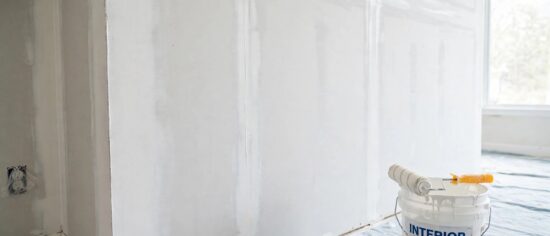
For a wall taped, mudded, and sanded properly, one full, even coat of PVA primer is the standard. Roll or spray it at full coverage, keeping a wet edge over paper and compound alike. Thin, patchy spots defeat the purpose, because any area the primer missed will still absorb the topcoat differently.
After the primer, the standard finish is two coats of paint. The primer seals and equalises, the first paint coat builds colour and coverage, and the second evens everything out and delivers durability. Cutting the paint to one coat to compensate for extra primer is a false economy: primer and paint do different jobs, and one cannot stand in for the other.
When a Second Coat Is Worth It
A second primer coat is the right call in four situations: unusually thick joint compound that stays more absorbent than the surrounding board after one coat; board sanded heavily enough to raise paper fuzz, leaving a rough, thirsty surface; chalky or highly absorbent drywall, where the first coat seems to vanish; and patches still uneven after the first coat has dried.
In those cases, a second coat is cheap insurance, far cheaper than finding flashing after two coats of expensive finish paint. Some painter blogs give two coats as a rule of thumb; treat that honestly as cautious-painter practice, not the standard. If your wall looks uniform after the first coat, a second coat adds little but time and material. To decide, check the dried first coat in raking light; if dull bands still show, roll on a second coat.
What Primer Cannot Fix
Primer is a sealer, not a filler, and it will not rescue mud work that is not ready. Dents, ridges, and poorly feathered seams will still be there after priming and after painting. In fact, primer can make them easier to see, since a sealed, uniform surface shows bumps more clearly than raw drywall. Useful, then: the primed wall is your last good chance to spot flaws before the finish.
Fix those problems before you prime, not after. A ridge gets knocked down with a sanding sponge and another thin skim of compound, feathered out wider than the last one. A dent gets filled, dried, and sanded flush. Sand firmly enough to smooth without tearing the paper facing, and wipe away sanding dust before priming, since dust sealed under primer shows as texture.
Paint-and-Primer-in-One Is Not a Shortcut Here
Paint-and-primer-in-one products, sometimes labelled self-priming paints, suit repaints over sound existing coatings, where the surface is already sealed and the new coat mainly needs to bond and cover. Fresh board and fresh joint compound are a different situation entirely.
On new drywall, these products commonly produce the exact problem primer exists to prevent: flashing at the seams under angled light. The paint layer is formulated to cover and finish, not to seal pores the way a dedicated PVA sealer does, so paper and compound still absorb it at different rates. The result can look fine head-on and disappointing in sideways sunlight or lamplight. The safer, cheaper route is the straightforward one: a PVA primer coat, then two coats of finish paint.
How to Apply the Coat So It Works
Good priming is mostly patience and coverage. Work in manageable sections, keep a wet edge so laps do not dry into visible lines, and do not stretch the primer thin. Cut in edges and corners first, then roll the field, and back-roll sprayed primer so it lays down evenly.
Let the primer dry fully before topcoating, following the product label rather than any single number online. Drying times typically run one to four hours depending on product and humidity, but the label on your can is the authority. A light scuff-sand is sometimes needed where priming raised the paper nap; do not sand back through to the compound. A primed wall can sit for a few weeks indoors before topcoating. If it sits much longer in a dusty or humid space, clean it first and consider a fresh primer coat.
Primer Coats at a Glance
| Situation | Primer coats | Why | Source |
|---|---|---|---|
| Properly taped, mudded, sanded new drywall | 1 | One PVA coat equalises absorption | This Old House |
| Unusually thick joint compound | 2 | Heavy build-up stays more absorbent | Family Handyman |
| Board sanded heavily, paper fuzz raised | 2 | Rough, thirsty paper needs extra sealing | The Spruce |
| Chalky or highly absorbent drywall | 2 | First coat soaks in without fully sealing | Bob Vila |
| Patches uneven after the first coat | 2 | Second coat evens out seams before paint | Family Handyman |
| Repaint over sound existing coating | 0 to 1 | Existing coating is sealed; primer only where repaired | This Old House |
Frequently Asked Questions
Can I use two coats of primer instead of primer plus two coats of paint?
No. Primer seals and equalises the surface, while finish paint provides colour, sheen, and durability. Two coats of primer plus one coat of paint will not match one coat of primer plus two coats of paint.
How do I know if my wall needs a second coat of primer?
Wait until the first coat is fully dry, then check the wall in raking light. If seams and patches blend in, one coat did the job. If dull bands still show, roll on a second coat.
Does primer hide bad taping and mudding?
No. Primer seals pores; it does not fill dents, ridges, or poorly feathered seams. Fix those with compound and sanding before priming. Primer can make them easier to spot, which is useful, since the primed wall is your last good chance to correct them.
Can I paint directly over new drywall with high-quality paint?
Not recommended. Even high-quality paint is absorbed at different rates by paper facing and joint compound, producing flashing and uneven sheen. A PVA primer coat costs little next to the finish paint and prevents that blotchy result.
How long can a primed wall wait before painting?
A primed wall can sit for a few weeks indoors. If it sits much longer in a dusty or humid space, clean it first and consider a fresh primer coat.
Conclusion
So, how many coats of primer on new drywall should you plan on? For most walls, one full, even coat of PVA primer-sealer, followed by two coats of finish paint. Add a second coat only when the wall gives you a reason: thick compound, fuzzed paper, chalky board, or patches that still show after the first coat. Fix mud work before priming, let each coat dry per the product label, and do not ask paint-and-primer-in-one to do a sealer’s job on fresh board. For more home improvement guides, visit Activemyhouse. And remember that how many coats of primer on new drywall is best settled before the first roller touches the wall, not after the finish coat has dried.