
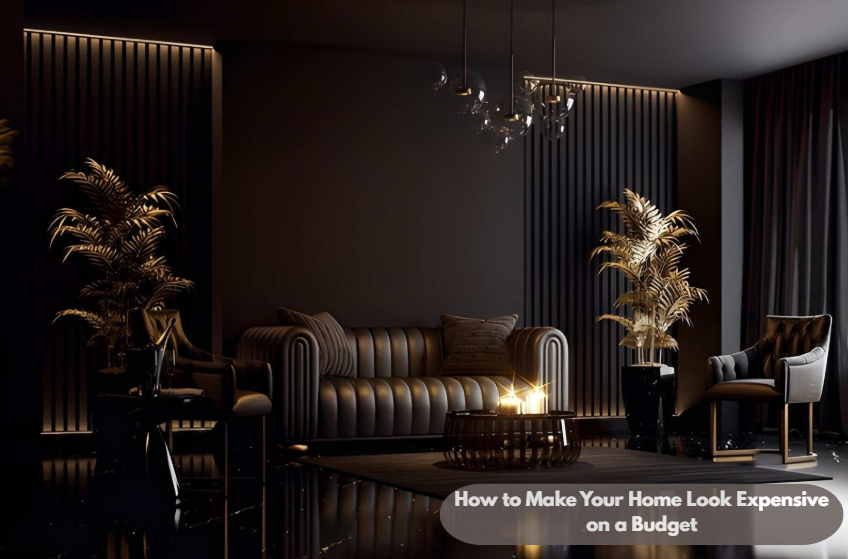
You walk into some homes and immediately think, “This person has taste.” Everything feels curated, calm, and intentional. Then you find out they didn’t spend a fortune—they just knew a few tricks. The good news? So can you.
Learning how to make your home look expensive on a budget isn’t about buying luxury items. It’s about understanding what expensive actually looks like—and then faking it brilliantly. Here’s how to do exactly that, room by room, without draining your savings.
1. Start With a Neutral, Cohesive Color Palette
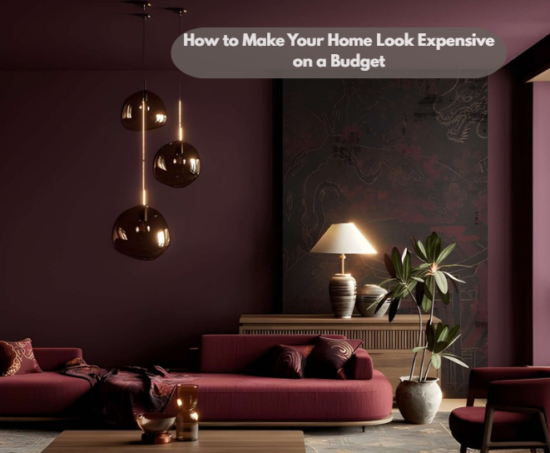
One of the fastest ways to learn how to make your home look expensive on a budget is to simplify your color story. Expensive-looking homes almost always lean on a tight palette—usually two to three colors that flow naturally from room to room.
That doesn’t mean everything has to be beige (though warm whites and soft greiges are genuinely timeless). It means avoiding the visual chaos that comes from mismatched walls, clashing furniture, and competing tones.
Pick one wall color you love and carry it—or a variation of it—throughout your home. Use your accent color sparingly. The restraint itself reads as luxury.
Budget tip: A single can of paint is one of the cheapest, highest-impact upgrades you can make. Don’t skip it.
2. Upgrade Your Hardware and Fixtures
This is the secret designers don’t always shout about: the details do the heavy lifting.
Swap out builder-grade cabinet handles, drawer pulls, and door knobs for something with weight and finish—brushed brass, matte black, or satin nickel all photograph and feel expensive. You can find quality pulls for a few dollars each, and the transformation is genuinely shocking.
Same goes for light switch plates, curtain rods, and towel bars. These are small purchases, but they signal to anyone who enters that you care about the finishing touches—and that’s exactly what luxury homes communicate.
Budget Tip: Instead of boutique design shops, buy multipacks of solid unlacquered brass or matte black hardware on Amazon or Wayfair. To make standard cabinets look entirely custom, look for pulls that include a matching backplate—it covers old screw holes and adds an instant, substantial architectural weight.
3. Invest in One Statement Piece Per Room
You don’t need to fill a room with nice things. You need one thing that anchors the space and earns attention.
In a living room, that might be a textured throw blanket draped over a sofa, a large piece of art above the couch, or an interesting floor lamp in the corner. In a bedroom, it could be a tufted headboard you made yourself or a bold patterned duvet.
When you concentrate your budget on one or two intentional statement pieces per room and keep everything else minimal, the whole space looks more deliberate—and deliberate always reads as expensive.
4. Use Curtains the Right Way
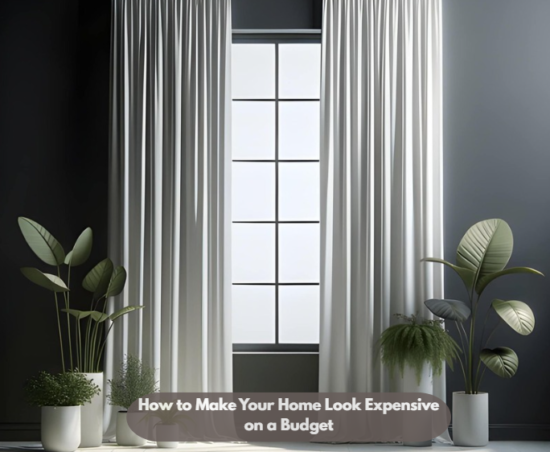
Most people hang curtains too low and too short. This single mistake makes rooms look smaller, ceilings look lower, and windows look cheaper than they are.
Try to hang your curtain rod as close to the ceiling as you can. Let the panels fall all the way to the floor—ideally with a slight puddle or just kissing the ground. Width matters too: your curtains should be wide enough to extend well beyond the window frame when open, so the glass gets fully exposed and the room feels larger.
Budget Tip: Inexpensive linen-blend panels from big-box retailers look incredibly upscale once you steam out the wrinkles and hang them using drapery rings instead of threading the rod through the fabric pocket.
5. Declutter Like You Mean It
Nothing undermines a beautiful space faster than clutter. Expensive homes feel spacious because they aren’t trying to show you everything at once.
Go through every surface in your home—countertops, shelves, coffee tables—and edit aggressively. Keep only what’s either beautiful or functional. Everything else gets a drawer, a basket, or a donation box.
This costs nothing. It might actually make you money at a yard sale. And the visual payoff is immediate.
6. Layer Your Lighting
Relying on a single overhead light is a dead giveaway that a room hasn’t been thoughtfully designed. High-end spaces use layered lighting—ambient (overhead), task (lamps for reading or working), and accent (highlighting art or architectural features).
Put a floor lamp in a shadowy area. Put a table lamp on a bookshelf. Use warm-toned bulbs throughout—2700K to 3000K gives a soft, inviting glow that looks nothing like the harsh fluorescent glare of cheaper setups.
Dimmers are another affordable upgrade that immediately elevates the feel of any room. You can install a basic dimmer switch yourself for under $15 and have dinner parties that feel five stars.
Budget Tip: You don’t need a contractor to add high-end wall lighting. Buy a pair of stylish, hardwired wall sconces, mount them directly to the wall where you want them, and tuck the wires away. Instead of wiring them to the mains, pop a puck light (rechargeable, remote-controlled LED bulb) inside the shade.
7. Style Your Shelves With Intention
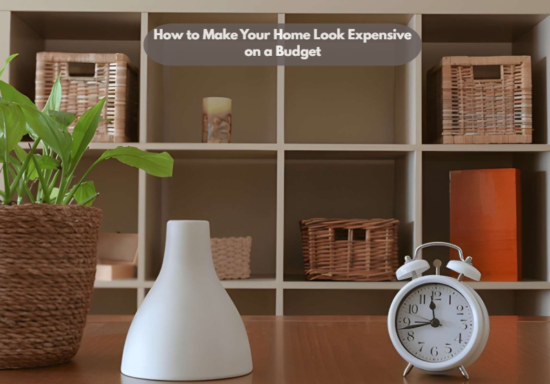
Bookshelves and open shelving are either a designer’s best friend or their worst enemy—it depends entirely on how they’re styled.
The formula that always works: group items in odd numbers, mix heights, add something living (a plant or fresh greenery), and leave breathing room. Filling every square inch is not necessary. In fact, the empty space is part of the composition.
Use books turned spine-in for a muted, monochromatic look, or organize them by color for a curated feel. Stack a few horizontally as a base for a small object. A single candle, a ceramic bowl, or a small framed print can do a lot of work when placed with intention.
For more shelf-styling ideas and room-by-room design guidance, resources like decoratoradvice .com partners offer practical, visual inspiration that bridges the gap between magazine-worthy and actually achievable.
8. Bring in Natural Elements
Stone, wood, linen, ceramic, and rattan—natural materials have texture and warmth that synthetic alternatives can’t replicate. And you don’t need to buy them new or expensive.
A wooden cutting board propped on a kitchen counter. A woven basket holding blankets by the sofa. A terracotta pot housing a trailing plant. These elements ground a space in something real and tactile, which is a hallmark of well-designed interiors.
Thrift stores and discount home goods shops are goldmines for natural-material finds. A chipped ceramic vase at half price still looks beautiful on a shelf.
9. Make Your Bed Like a Hotel
The bedroom is where most of us spend the most time, and it’s often the most neglected when it comes to design. A well-made bed may completely change the space.
You don’t need expensive linens—you need white or neutral ones, layered thoughtfully. A fitted sheet, a flat sheet, a duvet, and two to four pillows in complementary sizes. Fold the duvet back a third of the way. Fluff the pillows. Iron the pillowcases if you’re feeling ambitious.
Hotel beds look luxurious because they’re crisp, layered, and proportional. Replicate that formula and your bedroom will feel like a retreat.
10. Don’t Underestimate the Power of Scent
Expensive homes often smell as good as they look. Scent is one of the most underused design tools in most people’s arsenals.
A quality candle, a reed diffuser, or even a small bowl of dried botanicals can shift how a space feels the moment you walk in. You don’t need to spend a lot—a single well-placed candle in a beautiful holder on a coffee table does double duty as a decorative object and an olfactory experience.
11. Edit Your Art and Frame It Properly
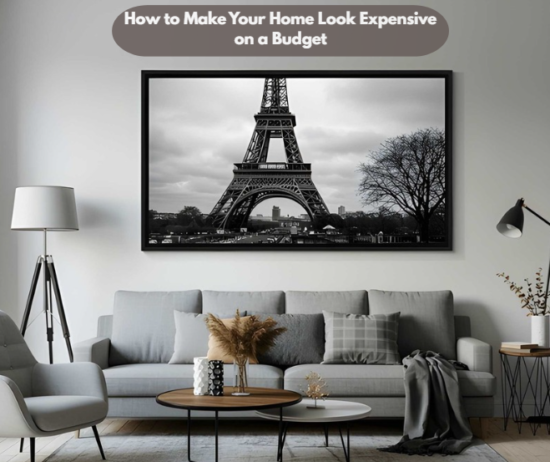
Art doesn’t need to be original or expensive. It needs to be framed well and hung intentionally.
A single large print in a simple black frame looks dramatically better than three small mismatched frames clustered on a wall. Download free artwork from public domain sites, print it at a local copy shop in a large format, frame it, and hang it at eye level. The result is something that genuinely stops people in their tracks.
Go larger than what seems comfortable when in doubt. Most people hang art that is too small and too high—correct both, and your walls immediately look more sophisticated.
Budget Tip: Source massive, ornate frames from thrift stores for a few dollars, ignore the ugly art inside, and spray-paint the frames a uniform matte black or antique gold. Swap the old picture for a high-resolution public domain print, and use off-white mat board to give a small print that oversized, gallery-exclusive look.
12. Lean on the Expertise Around You
You don’t have to solve every problem on your own. The design community is generous with knowledge, and there are resources built specifically for people who want beautiful spaces without the designer price tag.
Communities like https//decoratoradvice.com bring together practical advice, real-home transformations, and product recommendations that are grounded in what actually works—not just what looks good in a photoshoot.
Final Thoughts
Making your home look expensive on a budget isn’t about deception—it’s about intention. It’s about understanding the principles that make spaces feel considered and applying them thoughtfully, one room at a time.
You don’t need to do everything at once. Pick one room. Start with paint and hardware. Add some curtains hung at ceiling height. Edit the clutter. Layer in lighting. Watch what happens.
At the end of the day, the most high-end spaces aren’t necessarily the ones with the largest price tags; they’re simply the ones where someone paid attention to scale, texture, and light. Now that you know how to make your home look expensive on a budget, pick one room this weekend and start small. Thoughtful design is something anyone can achieve—regardless of their bank account.